If you’ve ever had Korean BBQ, you’ve probably tasted ssamjang—the rich, spicy paste made from doenjang and gochujang. Now imagine that umami-packed flavor wrapped around creamy spaghetti with butter, garlic, and Parmesan. That’s exactly what this Korean Ssamjang Pasta delivers—a comforting fusion dish that’s bold, creamy, and deeply satisfying. It’s like a cross between Alfredo and Korean street noodles, and it’s ready in less than 30 minutes.
Table of Contents
Why You’ll Love This Korean Ssamjang Pasta
This dish is the perfect balance of spicy, savory, and creamy. It’s simple to make, big on flavor, and totally unique.
- Creamy sauce with a punch of Korean spice
- Simple ingredients, minimal prep
- Customizable heat level
- Great for weeknight dinners or meal prep
- Feels gourmet but cooks fast
- Combines Korean flavors with Italian comfort
I first made this recipe after a trip to Seoul, where I tasted a ssamjang-based cream pasta that blew my mind. It was smoky, nutty, and rich—all the things I love in a dish. When I got home, I recreated it in my own kitchen with a Texas twist. Now it’s one of my favorite “wow factor” dinners when friends come over.
Ingredients You’ll Need
This dish uses simple pantry ingredients with a Korean twist.
For the Pasta
- 200g spaghetti – or any long pasta that holds creamy sauce well
For the Sauce
- 1 tbsp butter – gives richness and helps carry the ssamjang flavor
- 1 tbsp minced garlic – builds that savory foundation
- 3 tbsp ssamjang – the star ingredient with deep, spicy umami
- ⅓ cup Parmesan cheese – adds saltiness and texture
- ¾ cup cream (~200g) – smooth and luscious base
- Black pepper – to taste, for balance
- Red pepper flakes – to taste, for heat
- Reserved pasta water – helps emulsify the sauce
- Salt – to taste, as needed
Optional Garnish and Serving
- Green onions – for freshness and crunch
- Soft-boiled egg – adds richness
- Extra Parmesan – for serving
- Kimchi – classic Korean side for balance
Optional Add-Ons or Substitutes
- Swap cream for coconut milk for a lighter twist
- Add sautéed mushrooms or spinach for texture
- Use fettuccine or linguine for a wider noodle
- Add grilled shrimp or chicken for protein
- Use gochujang (Korean chili paste) for extra spice
- Top with sesame seeds for crunch
Step-by-Step Instructions
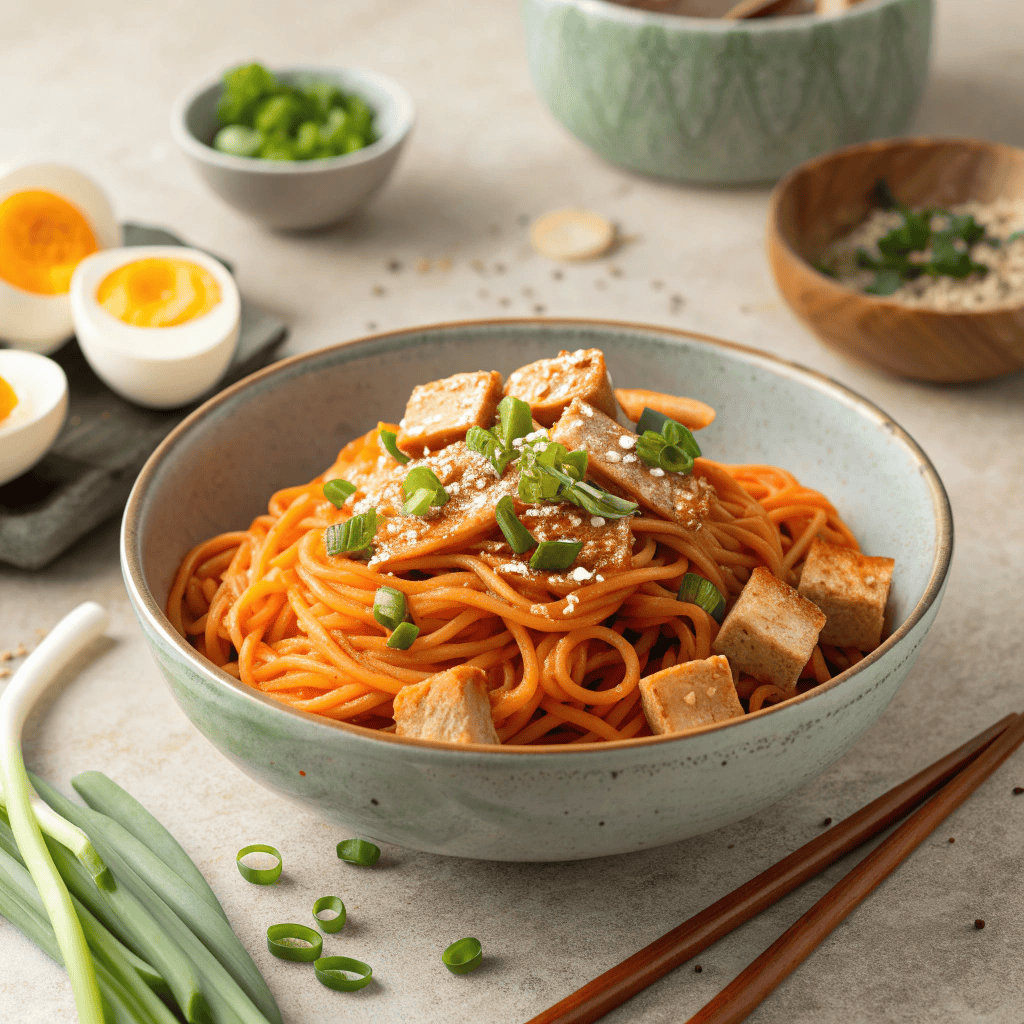
Korean Ssamjang Pasta comes together quickly—perfect for busy nights when you still want something special.
- Cook the pasta.
Bring a large pot of salted water to a boil. Add spaghetti and cook until al dente. Reserve 1 cup of pasta water, then drain. (That starchy water will help create a velvety sauce later.) - Build the flavor base.
In a large skillet, melt butter over medium heat. Add minced garlic and sauté for 30 seconds until fragrant. (Don’t brown it—just enough to bring out the aroma.) - Add the ssamjang.
Stir in ssamjang and cook for 1 minute, letting it blend with the garlic and butter. It should become aromatic and slightly caramelized. - Create the sauce.
Pour in the cream and whisk until the ssamjang fully dissolves. Add Parmesan cheese, pepper, and red pepper flakes. Simmer gently for 3–4 minutes until the sauce thickens. - Toss the pasta.
Add cooked spaghetti to the sauce and toss well, adding reserved pasta water a little at a time until you get a smooth, glossy coating. Taste and adjust with salt or more ssamjang as needed. - Garnish and serve.
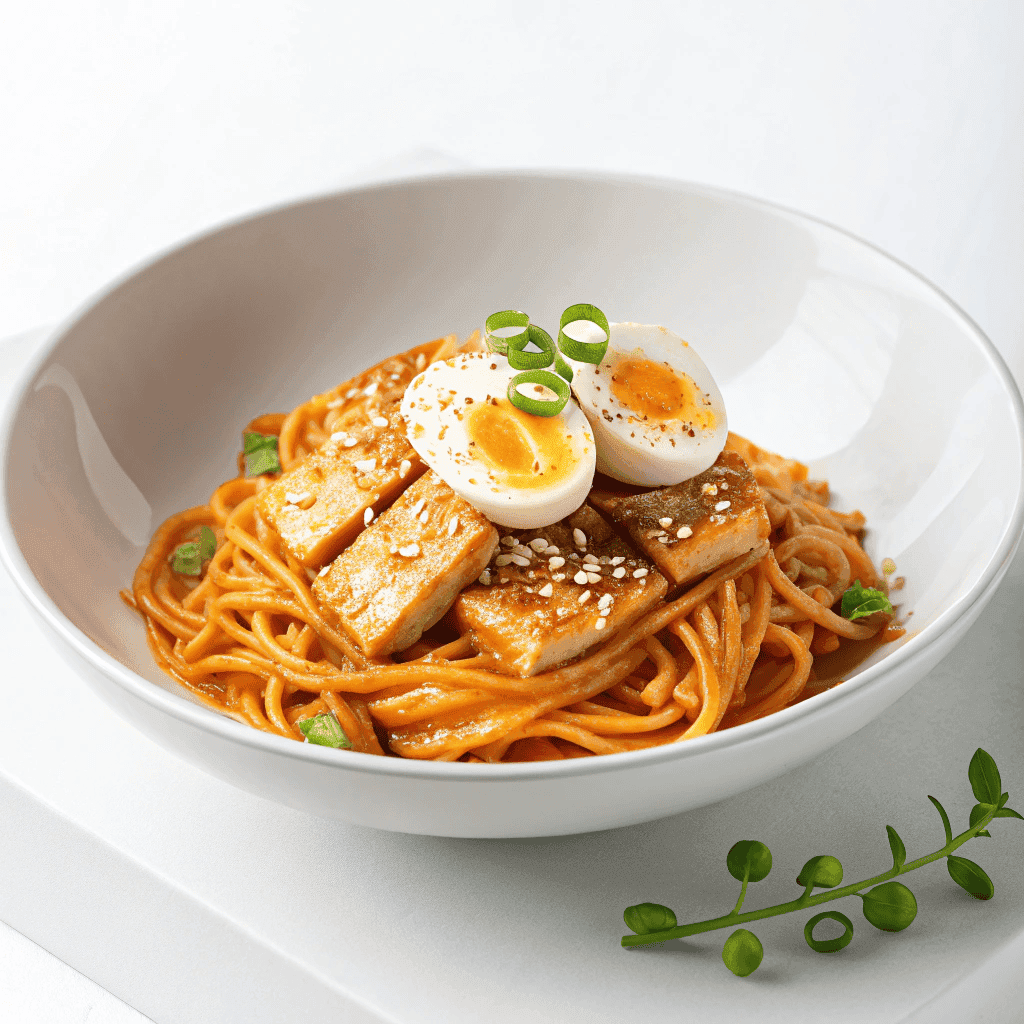
Serve warm, topped with green onions, a soft-boiled egg, and a side of kimchi for the ultimate East-meets-West comfort meal.
Quick reminders:
- Always reserve pasta water—it’s essential for emulsifying the sauce
- Keep the heat low when adding cream to prevent curdling
- Adjust the spice level gradually; ssamjang varies in intensity
- Use fresh Parmesan—it melts smoother and tastes better
Expert Tips for Success
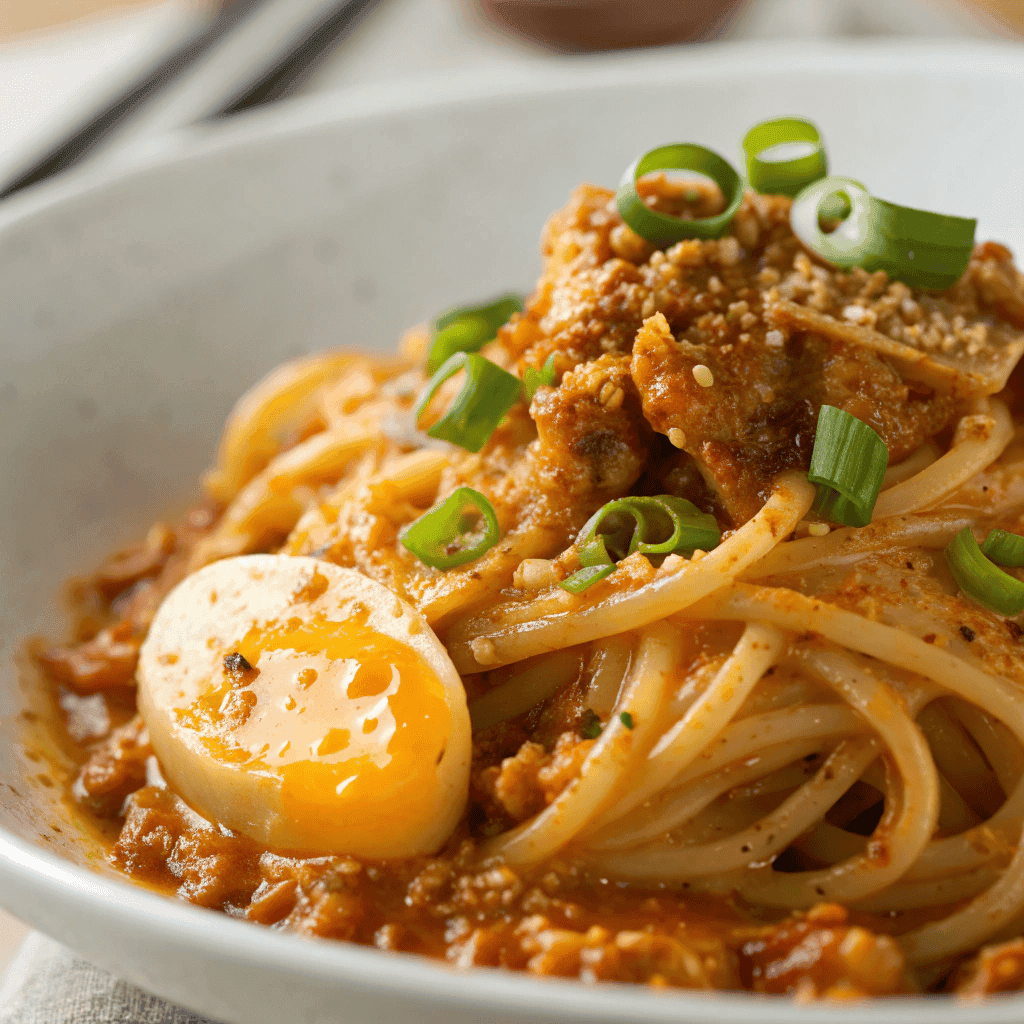
This recipe is quick, but attention to detail makes it shine.
- Cook garlic slowly for a mellow flavor base
- Don’t skip Parmesan—it balances the spicy ssamjang perfectly
- Stir constantly after adding cream for a smooth texture
- Add pasta water little by little until it’s just glossy
- Garnish with fresh green onions for a pop of color
- Pair with kimchi—it cuts through the cream beautifully
- For extra umami, stir in a touch of soy sauce or miso
If you love fusion dishes with bold flavors, try my Korean Beef Bulgogi Bowls or Kung Pao Chicken Noodles. Both bring that same comfort-meets-adventure spirit right to your kitchen.
Serving Suggestions
This pasta works as a hearty main course or a creative side for Korean-style dinners.
- Serve with crisp kimchi for contrast
- Add a soft-boiled egg for creaminess
- Pair with steamed vegetables or roasted broccoli
- Serve alongside Slow Cooker Korean Beef for a full fusion meal
- Sprinkle with sesame seeds or crushed seaweed for a finishing touch
- Plate in shallow bowls for that restaurant-style presentation
It’s one of those dishes that looks gourmet but comes together in minutes—perfect for impressing guests or spicing up your weeknight dinner.
Storing and Reheating
Like most creamy pastas, this one keeps well with just a little care.
How to Store It
- Store cooled pasta in an airtight container for up to 3 days
- Add a drizzle of olive oil before refrigerating to prevent sticking
- Avoid freezing—it can change the sauce texture
- Keep garnishes like eggs or onions separate until serving
How to Reheat It
- Reheat gently on the stovetop with a splash of milk or cream
- Microwave on 50% power in short intervals, stirring between each
- Add a touch of ssamjang before reheating to refresh flavor
- Garnish again with green onions and fresh Parmesan before serving
- Serve immediately for the best texture and taste
Even reheated, it stays creamy and full of that signature ssamjang kick.
Nutrition Information
Serving: 1 bowl | Calories: 560 | Carbohydrates: 55g | Protein: 18g | Fat: 30g | Saturated Fat: 16g | Cholesterol: 70mg | Sodium: 780mg | Fiber: 3g | Sugar: 4g | Calcium: 210mg | Iron: 2mg | Potassium: 380mg
Frequently Asked Questions
What is ssamjang?
Ssamjang is a Korean paste made from fermented soybean (doenjang), chili paste (gochujang), garlic, and sesame oil. It’s savory, spicy, and packed with umami flavor.
Can I make this vegetarian?
Yes! Just make sure your ssamjang doesn’t contain anchovy extract and skip any meat garnishes.
What if I don’t have ssamjang?
You can mix equal parts miso and gochujang for a close flavor profile.
Final Thoughts
Korean Ssamjang Pasta is the kind of recipe that makes you excited to cook—creamy, spicy, and full of character. It’s the perfect bridge between cozy Italian comfort and bold Korean flavor.
- Layer your sauce flavors slowly for balance
- Use good ssamjang for authentic taste
- Serve hot and fresh for the best texture
When I make this dish, I think of it as food that tells a story—about travel, discovery, and finding comfort in new flavors. That’s what Hearty Home Recipes is all about: bringing the world to your table, one bite at a time.

Korean Ssamjang Pasta
Ingredients
Equipment
Method
- Bring a large pot of salted water to a boil. Cook spaghetti until al dente. Reserve 1 cup of pasta water, then drain spaghetti and set aside.
- In a large skillet over medium heat, melt butter. Add minced garlic and sauté for about 30 seconds until fragrant, being careful not to brown.
- Stir in ssamjang and cook for 1 minute, allowing it to blend with butter and garlic.
- Pour in the cream, reduce heat to low, and whisk until smooth. Add grated Parmesan, black pepper, and red pepper flakes. Simmer gently for 3–4 minutes until slightly thickened.
- Add the cooked spaghetti to the sauce. Toss, adding reserved pasta water little by little until the sauce reaches a smooth, glossy consistency. Taste and adjust seasoning with salt or extra ssamjang if desired.
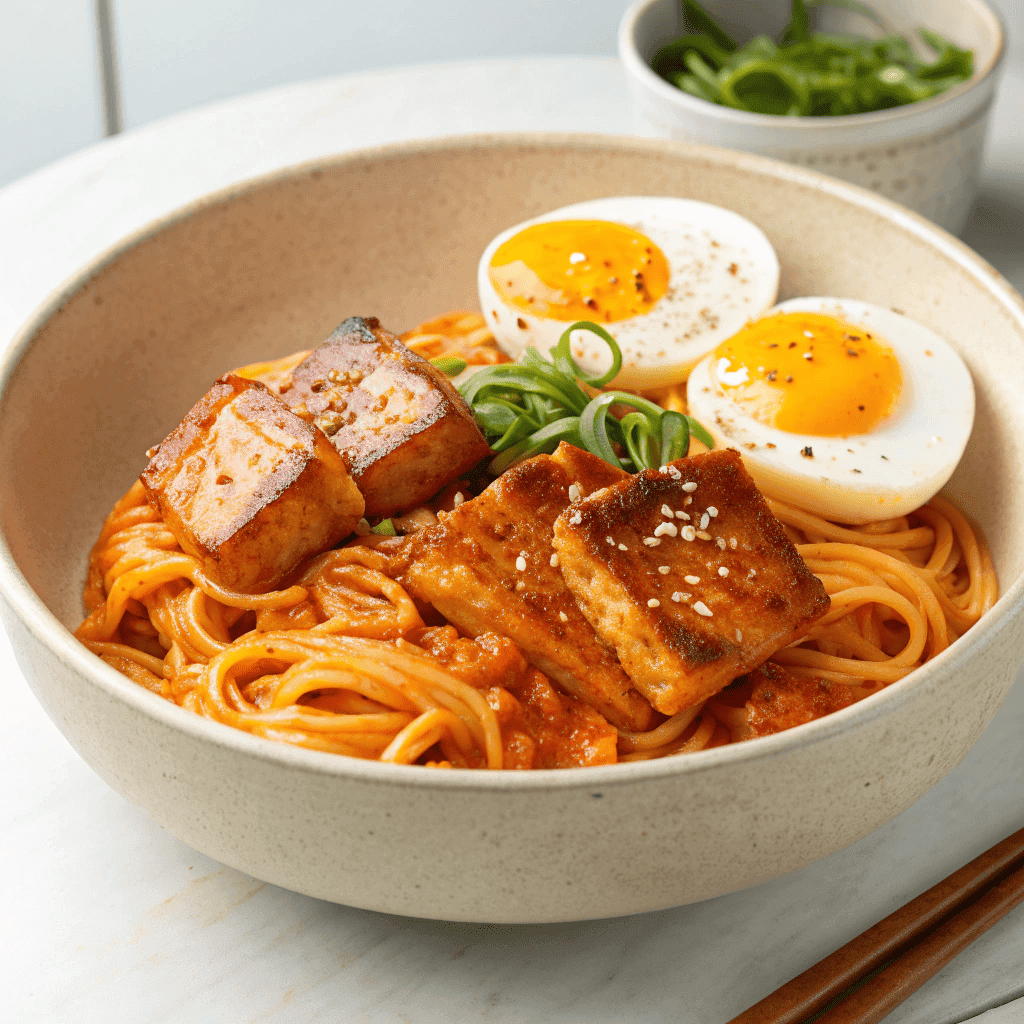
- Serve immediately, garnished with sliced green onions, an optional soft‑boiled egg, and extra Parmesan if desired.
Nutrition
Notes
- Spice level can be adjusted by varying the ssamjang and red pepper flakes.
- Use coconut milk or half‑and‑half to lighten the sauce, or add sautéed vegetables or protein for extra heartiness.