There’s something truly comforting about a warm bowl of Japanese Dumpling Soup — the kind that fills your kitchen with the scent of garlic, ginger, and sesame while the steam fogs up your windows on a cool evening. It’s light yet satisfying, simple to make, and bursting with umami.
This is the kind of dish I cook when I want something cozy but quick. Tender vegetable gyozas simmer in a delicate broth alongside bok choy, courgette, and a swirl of chili oil — giving every spoonful that perfect balance of warmth and freshness.
Table of Contents
Why You’ll Love This Japanese Dumpling Soup
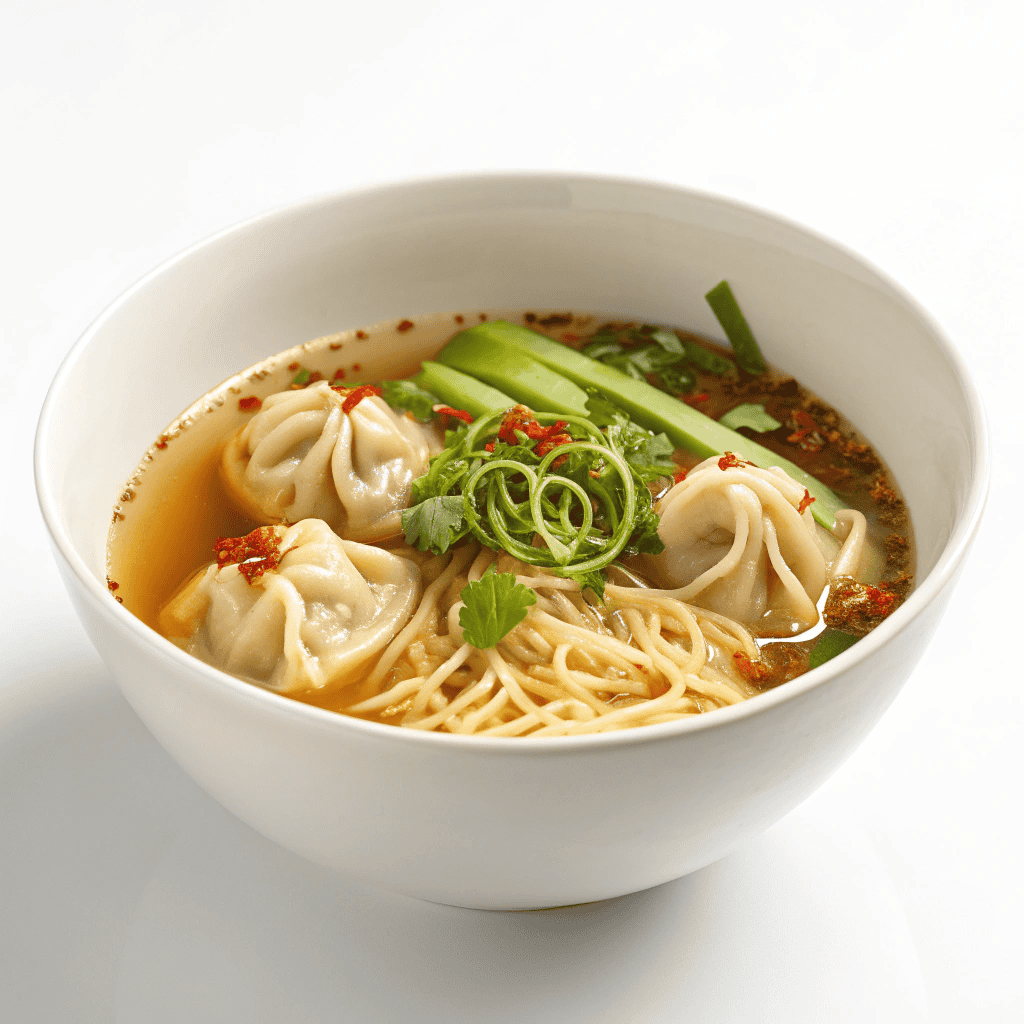
You don’t need fancy ingredients or hours of prep to enjoy this restaurant-worthy Japanese comfort dish.
- Quick and easy: Ready in under 20 minutes.
- Healthy comfort: A light broth packed with fresh veggies and dumplings.
- Customizable: Works with any dumpling variety — veggie, chicken, or shrimp.
- Umami-rich flavor: Soy, ginger, and chili oil create a perfect balance.
- Perfect weeknight meal: One pot, minimal cleanup.
This recipe reminds me of a small ramen bar I found tucked away in Tokyo. It was late, the rain was falling, and the cook served me a steaming bowl of dumpling soup with a side of quiet warmth. That same sense of calm and comfort is what I try to recreate every time I make this dish.
If you love brothy comfort with a twist, you’ll also enjoy my Red Curry Dumpling Soup — it brings a creamy, spicy kick to your dumpling game.
Ingredients You’ll Need For Japanese Dumpling Soup
Main Ingredients
- 5 vegetable gyozas
- 2 spring onions, thinly sliced
- ½–1 bulb pak choi, sliced into chunks
- 20 g fresh ginger, finely grated
- 1 clove garlic, minced
- ½ courgette, spiralized
Cupboard Essentials
- 500 ml vegetable stock
- 1 tbsp soy sauce
- 1 tbsp chili oil
- Salt and pepper, to taste
(Jake’s Tip: Keep frozen gyozas on hand — they turn a simple broth into a complete meal in minutes.)
Optional Add-Ons or Substitutes
- Add shiitake mushrooms for extra umami depth.
- Swap pak choi for spinach or Chinese cabbage.
- Use chicken stock instead of vegetable stock for a richer flavor.
- Add tofu cubes or edamame beans for extra protein.
- Drizzle a little sesame oil at the end for nutty aroma.
Step-by-Step Instructions
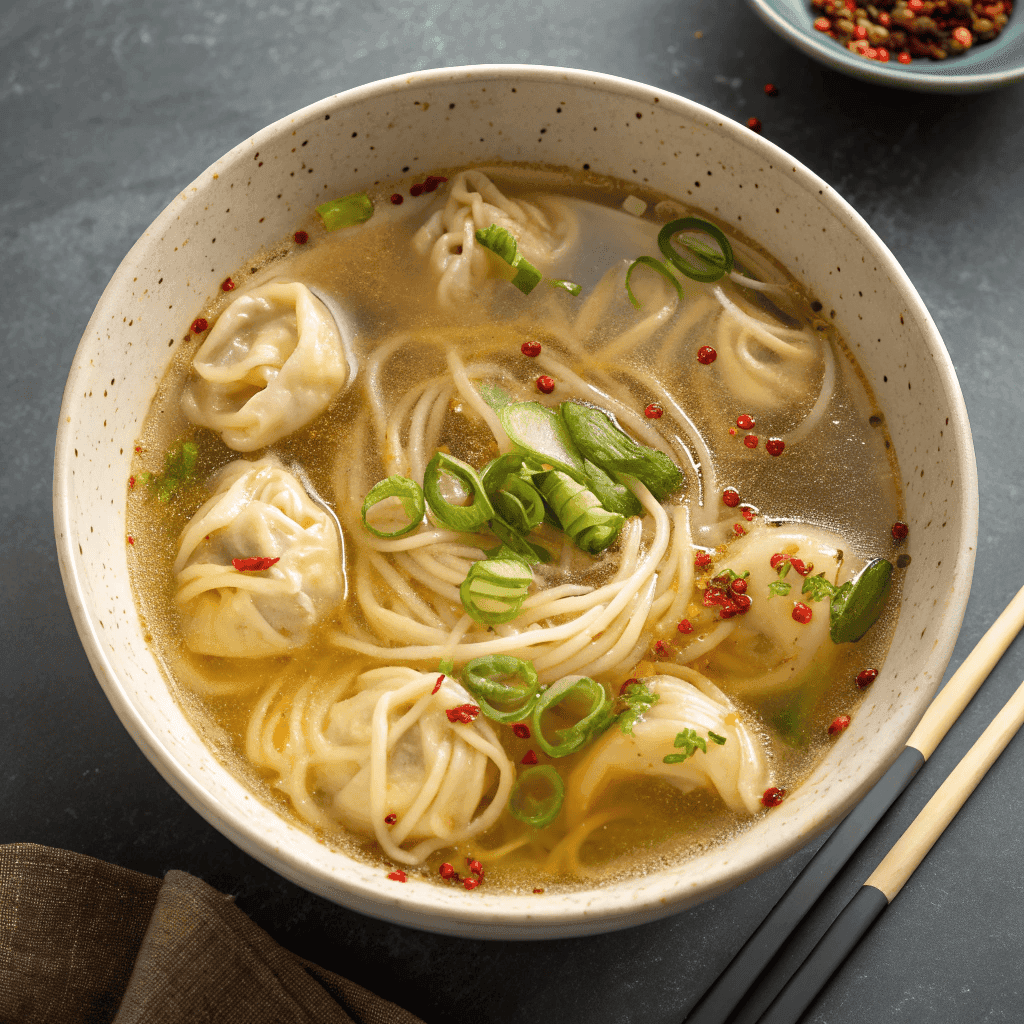
- Sauté aromatics:
Heat a splash of oil in a large saucepan over medium heat. Add garlic and ginger, sautéing for 1–2 minutes until fragrant. - Build the broth:
Pour in vegetable stock, soy sauce, and a pinch of salt and pepper. Bring to a gentle boil. - Cook the gyozas:
Carefully drop the vegetable gyozas into the simmering broth. Reduce heat slightly and cook for 5–6 minutes, or until the dumplings float and are tender. - Add vegetables:
Stir in the pak choi, courgette, and spring onions. Simmer for another 3–4 minutes until vegetables are just tender but still vibrant. - Finish and serve:
Drizzle with chili oil and garnish with extra spring onions or sesame seeds.
Quick Reminders:
- Don’t overcook the gyozas — they should be tender, not mushy.
- Add vegetables last to keep them crisp and bright.
- Adjust salt and soy sauce to taste before serving.
Expert Tips for Success
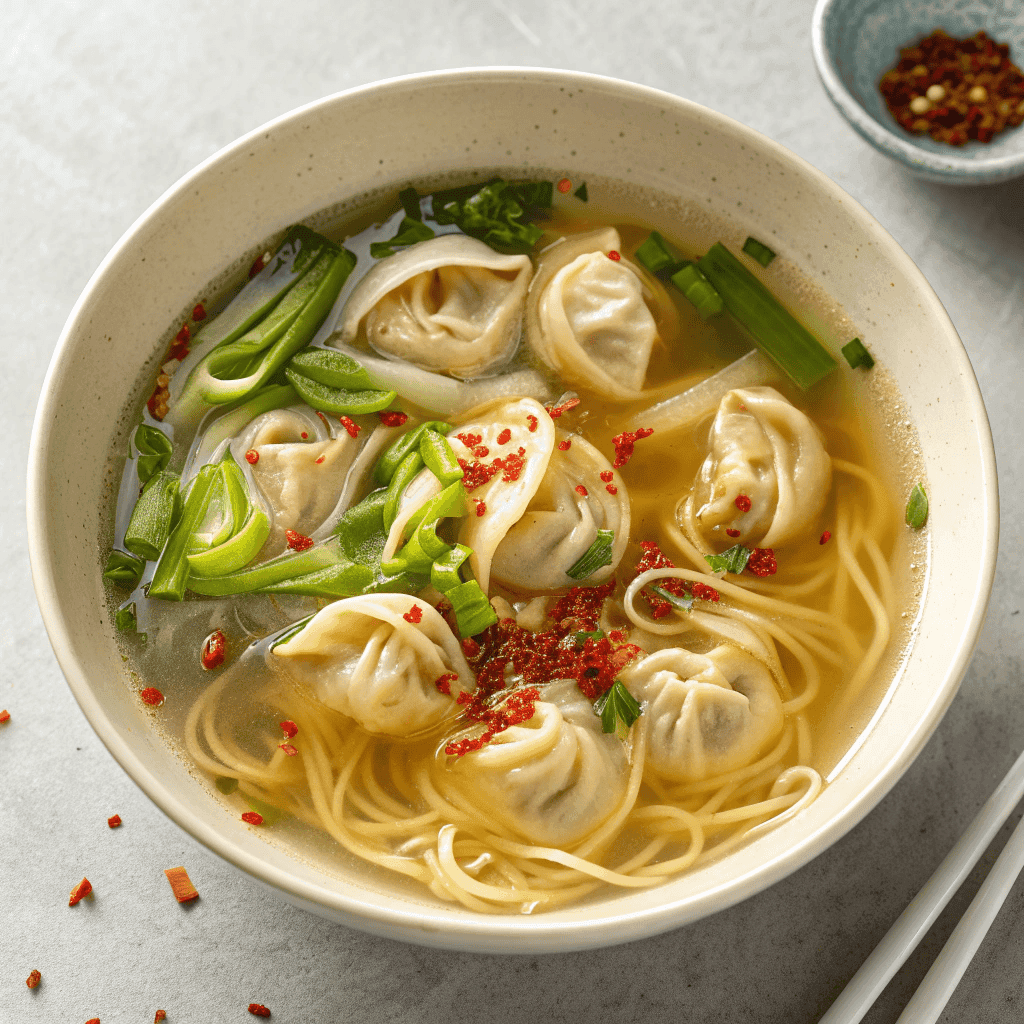
- For frozen gyozas: Add them directly to the broth — no need to thaw.
- Double the broth: It’s so good, you’ll wish you had more.
- Spice it up: Add extra chili oil or red pepper flakes for heat.
- Meal prep: Make the broth in advance — just reheat and add dumplings.
- Add texture: Toss in crispy garlic chips or fried onions for crunch.
If you love simple, flavorful soup bowls like this one, you’ll adore my Potsticker Soup — it’s hearty, satisfying, and equally quick to make.
Serving Suggestions
- Serve with steamed edamame for extra protein.
- Add a side of sticky rice or Japanese cucumber salad.
- Pair with green tea for a light, balanced meal.
- For a cozy dinner, serve it alongside my Miso Carrot Soup — both complement each other beautifully.
- Garnish with nori flakes or fresh herbs for an elegant finish.
(Jake’s Tip: The best way to enjoy this soup? Right from the pot, standing by the stove on a cold day — it’s that comforting.)
Storing and Reheating
How to Store It:
- Store leftovers in an airtight container in the fridge for up to 3 days.
- For best texture, store dumplings separately from the broth.
How to Reheat It:
- Reheat gently on the stove until warm.
- Add extra broth or water if the soup thickens.
- Avoid boiling once gyozas are added — they can fall apart.
Freezer Tip:
- Freeze the broth separately; cook dumplings fresh each time.
Nutrition (Per Serving)
- Calories: 285
- Protein: 8g
- Carbohydrates: 26g
- Fat: 16g
- Saturated Fat: 3g
- Sodium: 790mg
- Fiber: 3g
- Sugar: 4g
- Vitamin A: 2100 IU
- Vitamin C: 22mg
- Calcium: 85mg
- Iron: 2mg
Frequently Asked Questions
Can I use frozen gyozas?
Yes! They go straight into the broth — just cook a few minutes longer.
What’s the best way to make it spicy?
Add extra chili oil or stir in a teaspoon of sriracha or gochujang.
Can I make it vegetarian?
It already is! Just ensure your gyozas and broth are plant-based.
Final Thoughts
This Japanese Dumpling Soup is everything you want in a cozy meal — warm, aromatic, and ready in minutes. It’s proof that comfort doesn’t have to be complicated.
From its silky broth to its tender gyozas, every spoonful delivers the essence of Japanese simplicity and balance.
- Keep it light.
- Keep it fresh.
- And always serve it steaming hot.
For another cozy Asian-inspired comfort dish, try my Curry Dumpling Soup next — it’s rich, aromatic, and full of flavor that soothes the soul.
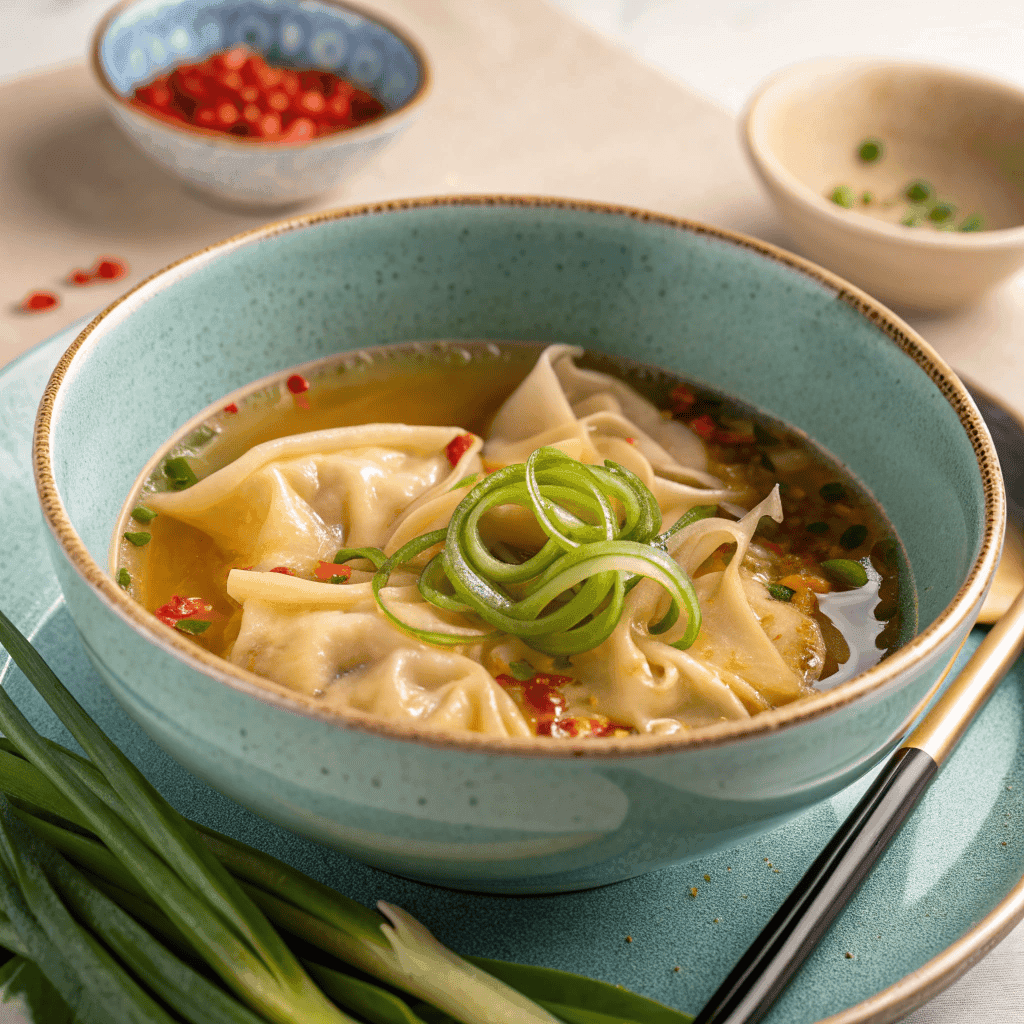

Japanese Dumpling Soup
Ingredients
Equipment
Method
- Heat a small splash of oil in a saucepan over medium heat. Add garlic and ginger and sauté for 1–2 minutes until fragrant.
- Pour in vegetable stock, soy sauce, salt, and black pepper. Bring to a gentle boil.
- Add the vegetable gyozas to the simmering broth and cook for 5–6 minutes until tender.
- Stir in pak choi, courgette, and spring onions and simmer for another 3–4 minutes until vegetables are just tender.
- Drizzle with chili oil, adjust seasoning if needed, and serve hot.
Nutrition
Notes
- This soup is best enjoyed fresh.
- For storage, keep dumplings and broth separate to preserve texture.